
Services
Four connected areas that share one foundation: full-stack development with Django and Python in Tabriz, for companies and organizations that have no ready-made tool for their process.
Bespoke and organizational software
When off-the-shelf software does not match how an organization works, a system is built that covers that organization's own processes, roles and reports. Development is staged, and each part can be reviewed before work continues.
- Designing and developing bespoke organizational software
- Developing web-based systems and management dashboards
- Designing information management software and databases
- Developing customer and enterprise resource management systems
- Designing and implementing reporting and information analysis systems
- 1User interfacePersian pages and forms
- 2Business logicOrganizational rules and processes
- 3DatabasesStorage and reporting
- 4Connecting to systemsWeb services and data exchange
Suitable for
- Organizations with a specific process
- Organizations with several departments
- Growing businesses
- Industrial and technical-services companies
- Owners of legacy software
Example applications
- Customer and contract management system
- Dashboard and management reporting
- Managing equipment and resources
- Staff panel and requests
- Managing projects and jobs
- Issuing invoices and following up on payment
AI and data analysis
AI is valuable when it is tied to a specific problem and specific data. The work starts with feasibility and a data-quality review, and the final model is placed inside the organization's software.
- Analyzing industrial and organizational data
- Developing machine learning models
- Trend forecasting and analysis of data behavior
- Processing and analyzing complex data
- Designing decision-support systems
Suitable for
- Industries with operational data
- Organizations that need quality control
- Organizations with large archives
- Companies with bespoke software
- Researchers and technical teams
Example applications
- Failure prediction and equipment maintenance
- Quality control and anomaly detection
- Demand forecasting and resource planning
- Industrial image processing
- Analyzing laboratory and engineering data
- Decision-support systems
Office automation and workflow
Requests, approvals, correspondence and job assignment move from paper and messaging apps into a system where every step has an owner and a history. The workflow is designed around the organization's real structure.
- Designing and implementing organizational workflows
- Computerizing the request and approval process
- Automating correspondence and internal processes
- Managing staff tasks and responsibilities
- Designing systems for assigning and following up on activities
Suitable for
- Organizations with a lot of paperwork
- Organizations with several approval levels
- Companies with field staff
- Managers who want transparency
- Administrative and financial units
Example applications
- Staged request and approval
- Paperless internal correspondence
- Overtime, leave and missions
- Assigning and following up on activities
- Inbox and notifications
- Management monitoring dashboard
Website and corporate portal design
Corporate websites, portals and web-based systems built with Django: responsive, fast and structured for search engines. The organization edits its own content from the admin panel.
- Designing and developing corporate and industrial websites
- Designing corporate portals
- Developing content management systems
- Designing multilingual websites
- Developing bespoke web-based systems
Suitable for
- Industrial companies and organizations
- Organizations that want a portal
- Businesses with an old website
- Organizations with multilingual audiences
- Specialists and researchers
Example applications
- Corporate and industrial websites
- Corporate portal
- Content management system
- Multilingual websites
- User and management panel
- Forms and bespoke web-based systems
How we work: from requirements to delivery
Work cycle
Stages of work
- 1Requirements analysis
Talking with the main users, understanding the current process and defining the scope of work.
- 2Design and prototype
Designing pages, workflow and architecture, and getting them approved before development starts.
- 3Staged development
Each stage is delivered in usable, reviewable form so the real need becomes clear early.
- 4Deployment and support
Installation, user training, support and development of later stages.
Portfolio: Laboratory Management System
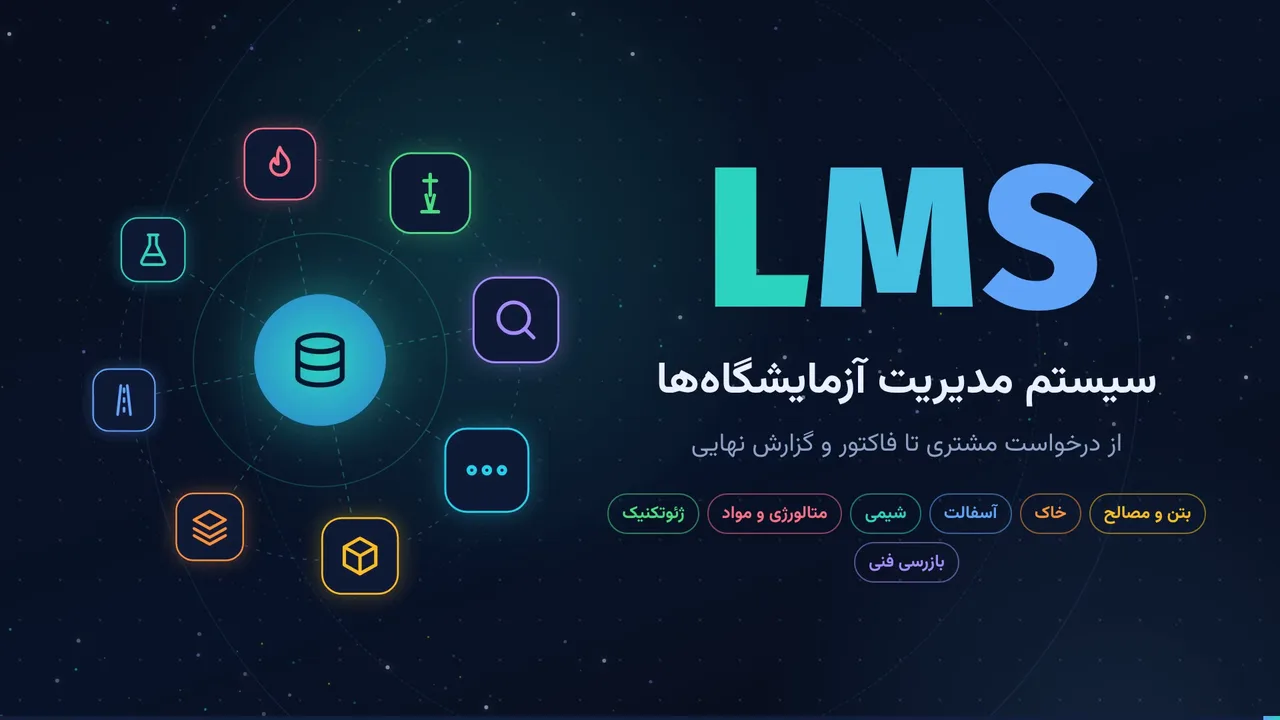
The LMS: a system built and in everyday use
A Persian web system built with Django that gathers twenty modules in one platform: contracts, jobs, invoices, inbox, correspondence and reporting. An example from each of the four areas in one project.
View the project and intro videoFrequently asked questions
What is bespoke software, and how does it differ from off-the-shelf software?
Bespoke software is built around the processes and needs of one specific organization, not for the general public. As a result it matches how that organization works and can gain new capabilities in the future.
When is bespoke software more cost-effective than off-the-shelf software?
When an organization's process is specific, off-the-shelf software does not cover the core needs, or forcing the organization to fit a tool causes a lot of cost and error. A preliminary needs review makes this decision clear.
How are cost and schedule determined?
Cost and timing depend on the scope of work, the number of modules and the complexity of the processes. After the requirements analysis, the project is split into smaller stages and a separate estimate is given for each.
Where does an AI project start?
It starts with a precise definition of the problem and a review of data quality. A technical feasibility check follows, and based on it a solution and implementation steps are proposed.
What is AI used for in industry?
Examples include equipment failure prediction, quality control, demand forecasting, industrial image processing and laboratory data analysis; the right application depends on the industry and the available data.
What exactly does office automation computerize?
It turns processes such as requests and approvals, internal correspondence, assigning and following up on activities, and managing staff tasks from manual, paper-based work into a traceable system.
Is paperless internal correspondence supported?
Yes. The correspondence module supports private letters for the recipient and CC recipients, comments at every step, file attachments, archiving and advanced search.
Can a multilingual website be designed?
Yes. Designing multilingual websites is part of the service, and the URL structure and content are planned separately for each language.
SEO-friendly structure is built into web design
Yes. Loading speed, responsive design, page titles and descriptions, a sitemap and a suitable content structure are considered from the start of the design.
Why Django for a website and corporate portal?
Django is a stable, secure foundation for building websites and web-based systems, providing an admin panel, access control and database integration.